a) Surge arresters
Metal oxide (Zinc oxide, ZnO) surge arresters, the limiting voltage levels of which in, especially grounded systems, can be as low as 1.5 p.u. of the service voltages in any over voltage application condition, have been generally applicable today. Surge arresters perform the most important role to realize economical UHV transmission systems. Without these, monster like facilities are inevitable.
b) Lightning over voltages
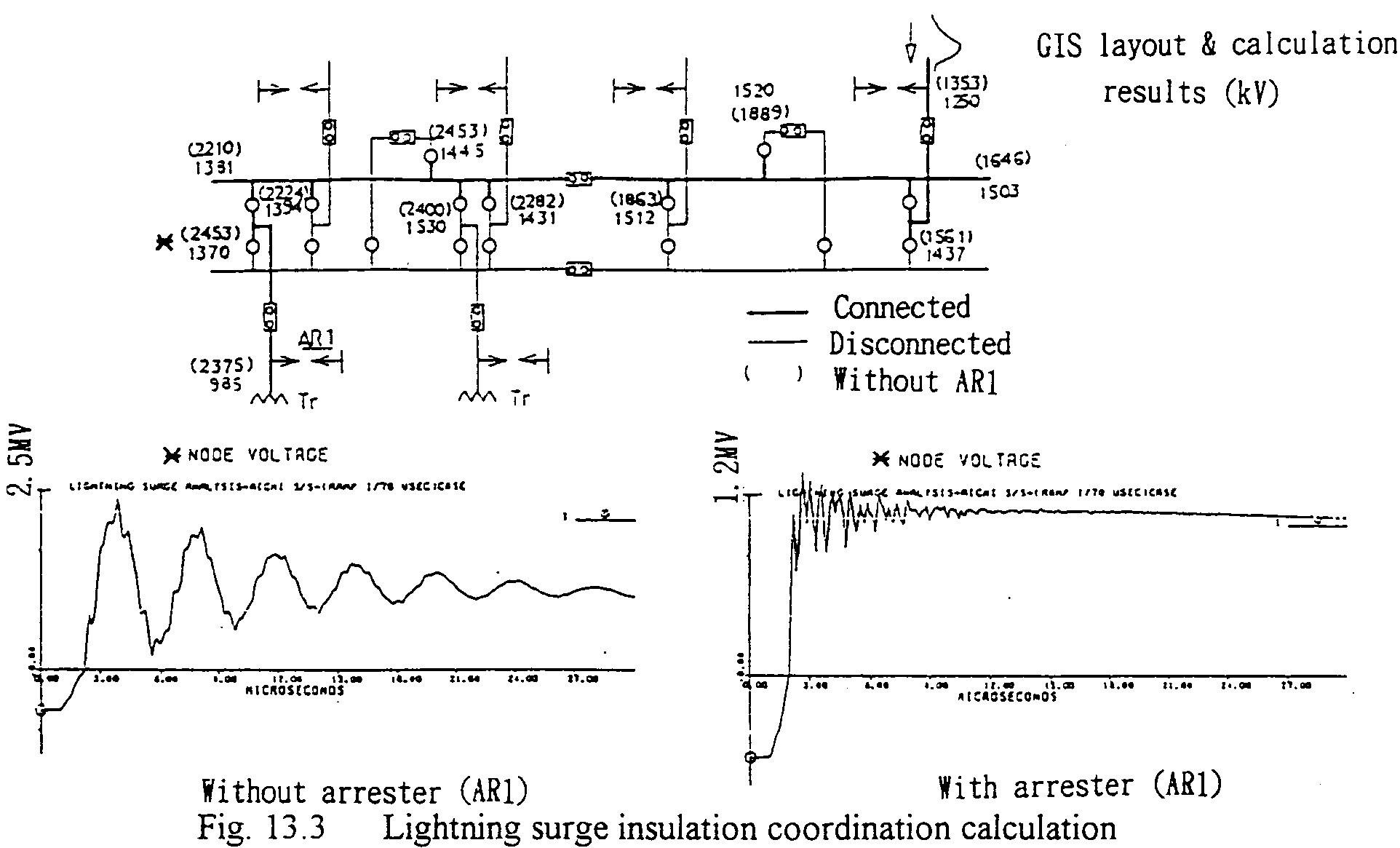
Lightning Strokes to transmission lines often create flashovers, resulting in line short-circuit faults. These faults are excluded by operations of relevant circuit-breakers such as rapid auto reclosing. While, short-circuit faults inside of sub-station facilities, due to the non-selfrestoring natures, influence seriously. So these faults should absolutely be avoided. Fortunately high ability of surge arresters mentioned above are applicable. The areas to be considered are limited within the sub-stations. By appropriate locations of the surge arresters of limited number, the sub-station protections are established.
For the insulation coordination process against lightning surge over voltages, i.e., survey of the lightning over voltage propagation in the sub-stations and to find the appropriate locations of these, EMTP has been widely and effectively applied. An example is shown in Fig. 13.3.
c) Switching over voltages
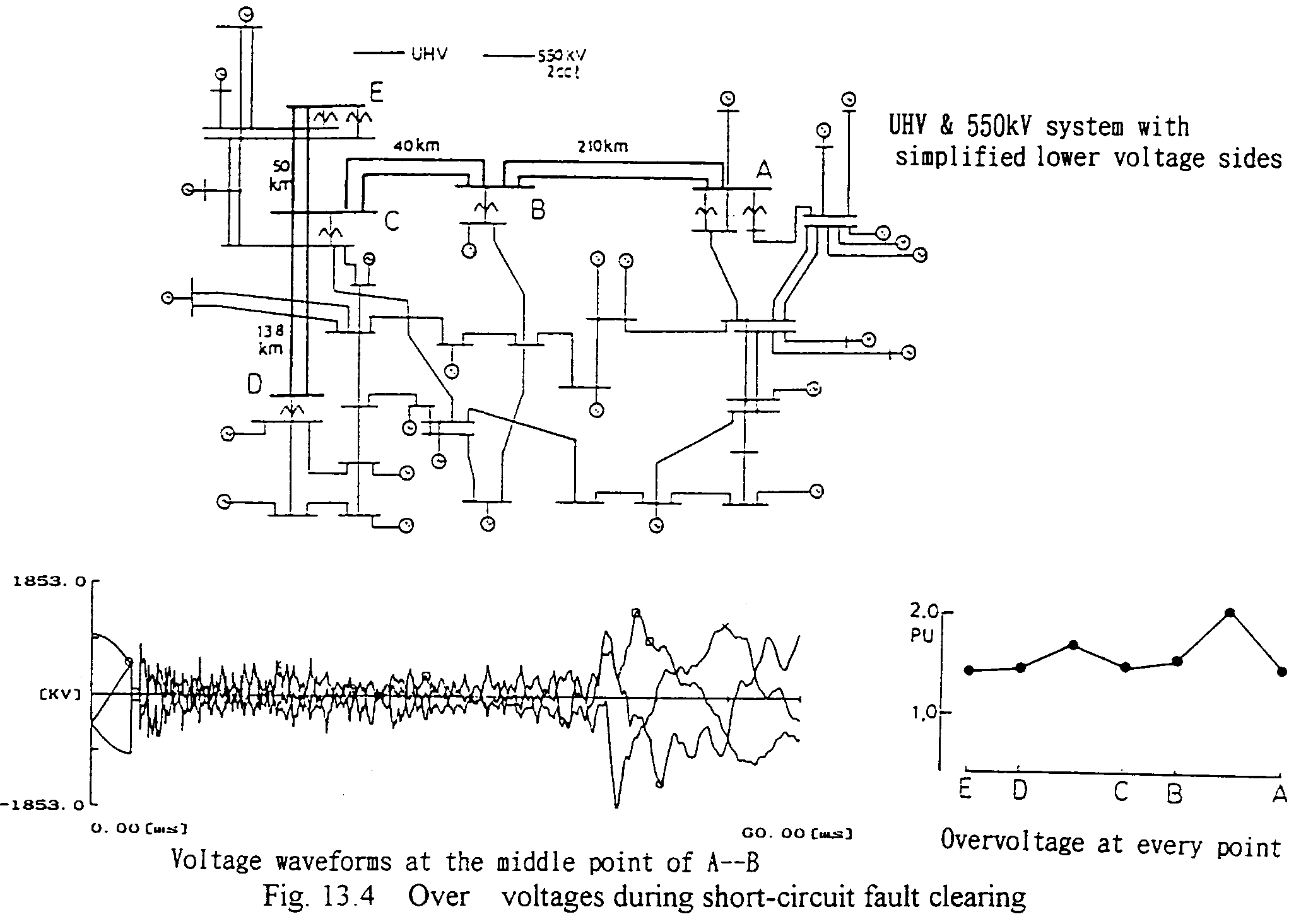
In sub-stations, also switching over voltages can be suppressed by surge arresters within safety levels. In transmission lines, nevertheless, due to no surge arrester exists along the lines, possible over voltages may not be suppressed. A lot of simulation calculations have been done and for the initial step of Japanese UHV system, "Soft switching circuit-breakers," i.e., inserting resistors during the switchings, are to be introduced. In future, When many sub-stations will be installed, where sub-stations will be located within relatively short distances from another, the over voltage at any part of the transmission lines will be suppressed by surge arresters installed at sub-stations. So, circuit-breakers without switching parallel resistors may be applied. As for switching over voltages by circuitbreakers, closings of no load transmission lines with probable trapped voltages and short-circuit fault clearings are the main causes. For the former cause, see chapter 3 of this text. For the latter, see Fig. 13.4, which shows typical over voltages during fault clearing at the far remote location.
d) Bus charging current switchings by disconnectors
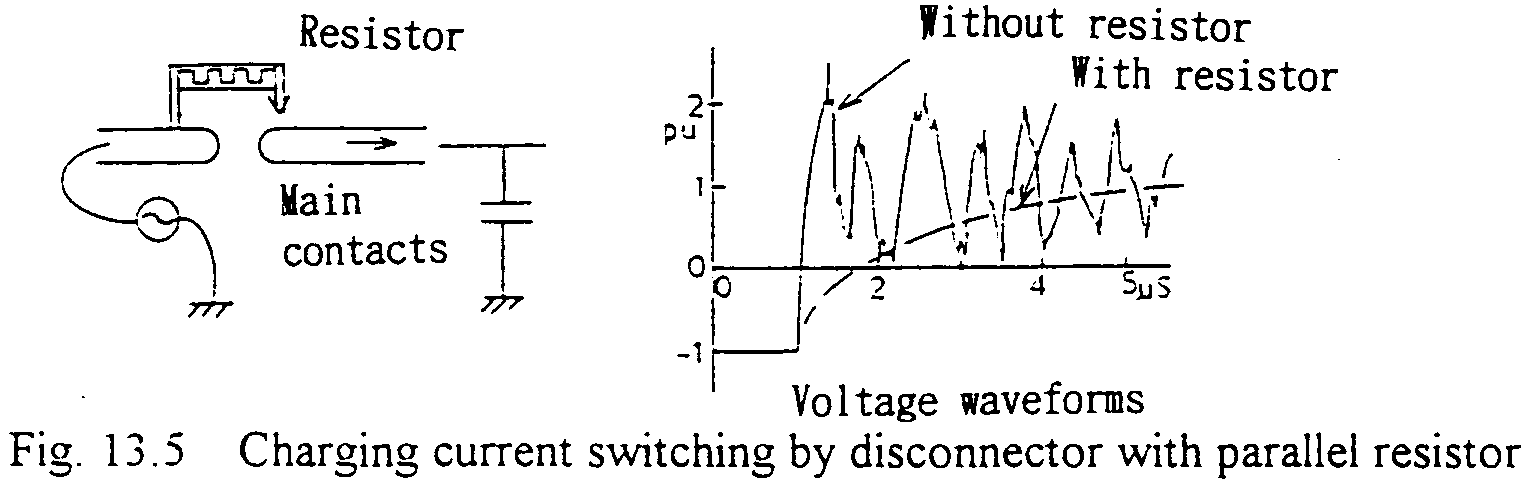
As shown in chapter 11, disconnectors are obliged to switch charging currents of the buses between the disconnectors and the series connected circuit-breakers. When switching, multiple restrikes occur followed with very high frequency of over voltages (in the order of several MHz). The maximum magnitude is ca. 2.5 p.u. of the service voltage. Such over voltages are not permissible in UHV GIS, so disconnectors with parallel inserting resistors will be applied. See Fig. 13.5.
e) High speed grounding switches
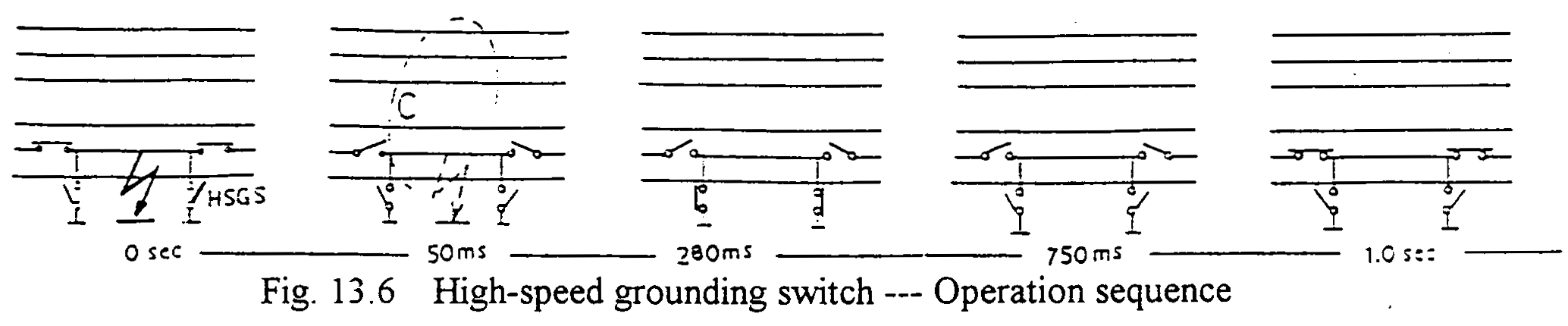
For the successful high speed auto reclosings in case of, especially, one line to ground faults, which are actually the most probable fault cases in systems, quenching of secondary arcs in transmission lines are furthermore important and difficult in UHV transmission systems. 4-leg type reactors (See chapter 3, Supplement) have been discussed a lot, but never have come to an appropriate conclusion. So, the high speed grounding switches, shown in Fig. 13.6, are possibly the best solution today.